

Behind: Hamilton The Musical
Written by Taylor Walker
There are very few pieces of musical theatre that have managed to change the way audiences experience history quite like Lin-Manuel Miranda's Hamilton. First premiering in 2015, the musical transformed the story of one of America's Founding Fathers into an extraordinary combination of hip-hop, R&B, soul, jazz and traditional Broadway theatre. However, what makes Hamilton so remarkable is not simply its music or its innovative casting, but the way Miranda manages to turn historical events into something deeply personal, emotional and relevant to modern audiences. Through its 46 songs, the musical explores ambition, immigration, love, betrayal, political power, grief and, perhaps most importantly, the human desire to leave behind a meaningful legacy. Although it tells the story of Alexander Hamilton, it is ultimately about much more than one man's life. It is about who gets remembered, who gets forgotten and who has the power to tell history.
The inspiration for Hamilton began in 2008, when Miranda picked up Ron Chernow's biography of Alexander Hamilton while on holiday. What immediately fascinated him was the extraordinary nature of Hamilton's life. Born in the Caribbean, raised in poverty and confronted with enormous personal difficulties, Hamilton managed to travel to America, become involved in the Revolutionary War and eventually establish himself as one of the most influential political figures in the country's history. Miranda recognised something incredibly compelling in his determination and ambition. He also saw similarities between Hamilton's immigrant experience and the experiences of his own family, particularly his father, who moved from Puerto Rico to America. This personal connection became fundamental to the musical's identity.
Miranda's decision to use hip-hop and rap was equally significant. Hamilton was an incredibly prolific writer who expressed himself through essays, political arguments, letters and pamphlets. His ability to communicate quickly and persuasively made him a formidable political figure. Miranda recognised that hip-hop, with its rapid lyrical delivery, complex wordplay and emphasis on storytelling, was the perfect musical language for representing Hamilton's personality. Rather than presenting eighteenth-century America through traditional musical theatre, Miranda wanted to make the founding of the United States sound like something happening in the present. His decision to cast predominantly actors of colour as America's Founding Fathers further reinforced this idea, connecting the historical story to contemporary American identity. As Miranda famously suggested, it is the story of America then, told by America now.
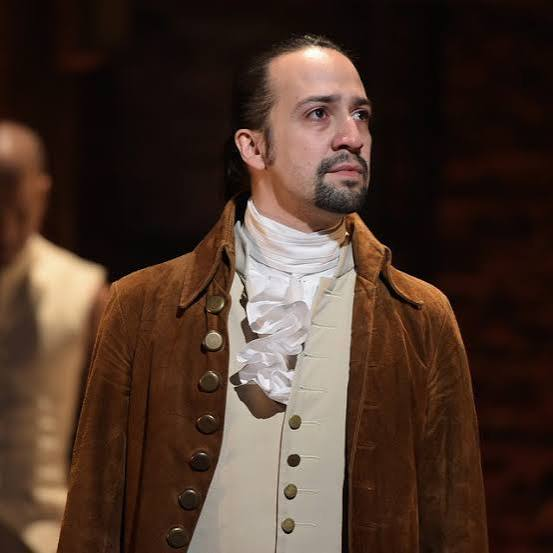
The musical begins with 'Alexander Hamilton', an introduction that establishes almost every major theme that will eventually define the story. Through the voices of Burr, Washington, Jefferson, Angelica, Eliza and other important characters, we learn about Hamilton's difficult childhood, his illegitimate birth, the death of his mother and his determination to escape poverty. The reference to the hurricane that destroyed much of his home is particularly important because Hamilton's written account of the disaster helped attract attention and contributed to the opportunity that eventually brought him to America. Miranda uses this historical detail to establish writing as one of Hamilton's greatest abilities. From the very beginning, words are presented as something capable of changing a person's circumstances.
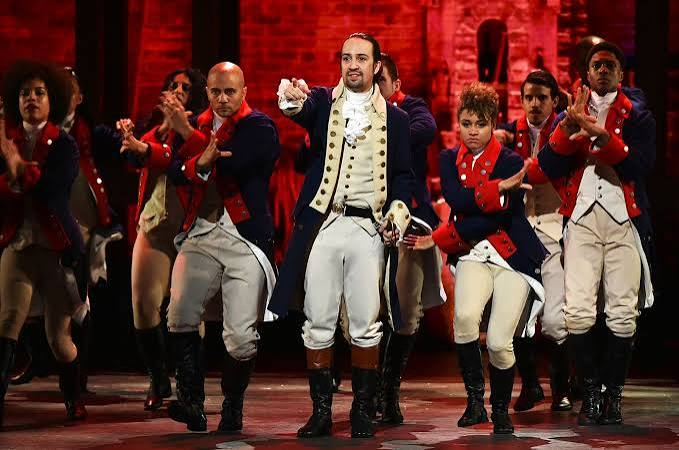
'Aaron Burr, Sir' introduces the relationship between Hamilton and Burr, establishing the fundamental difference between their personalities. Hamilton is impatient, ambitious and desperate to prove himself, whereas Burr advises him to be careful and wait for the right opportunity. Their disagreement becomes one of the musical's central conflicts. This difference is developed further in 'My Shot', arguably the most defining song of Hamilton's character. His declaration that he will not throw away his opportunity represents his determination to make something of himself despite the disadvantages of his background. The song is filled with rapid-fire lyrics, historical references and hip-hop influences, demonstrating Miranda's ability to communicate both character and historical information through music. Hamilton believes that he has one opportunity to achieve greatness, and he refuses to waste it.
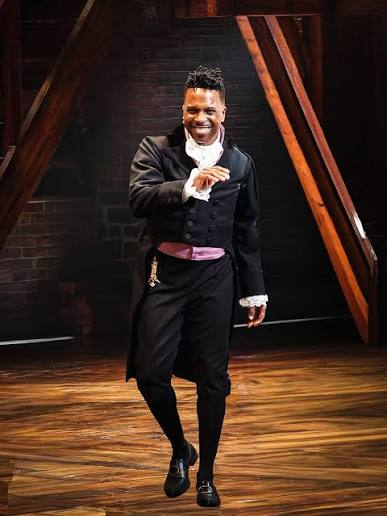
The introduction of Lafayette, Laurens and Mulligan in 'The Story of Tonight' establishes the friendships and revolutionary idealism that initially surround Hamilton. These young men believe they can change the world, and their excitement reflects the political atmosphere of the American Revolution. 'The Schuyler Sisters' then introduces Angelica, Eliza and Peggy, providing a different perspective on eighteenth-century society. The sisters are portrayed as intelligent, politically curious women who want opportunities beyond those traditionally available to them. Angelica, in particular, is presented as independent and outspoken. Her intelligence becomes especially important in 'Satisfied', one of the musical's most technically impressive songs. Miranda uses a backwards narrative structure to revisit Hamilton and Eliza's wedding celebrations from Angelica's perspective, revealing that she also developed feelings for Hamilton but chose not to pursue them for the sake of her sister. Although the exact nature of Angelica and Hamilton's historical relationship is debated, their surviving correspondence provides an interesting foundation for Miranda's interpretation.
One of the most important songs in the first act is 'Wait for It', which finally allows Burr to explain his own philosophy. Unlike Hamilton, Burr believes in patience and careful decision-making. His approach is shaped by the early deaths of his parents and his fear of losing the little stability he has managed to establish. The song is particularly effective because it challenges the audience's initial perception of Burr as simply Hamilton's jealous rival. He is not necessarily less ambitious; he is simply afraid of what might happen if he risks everything. This makes their eventual conflict much more tragic because both men have understandable motivations, even if their approaches to life are fundamentally incompatible.
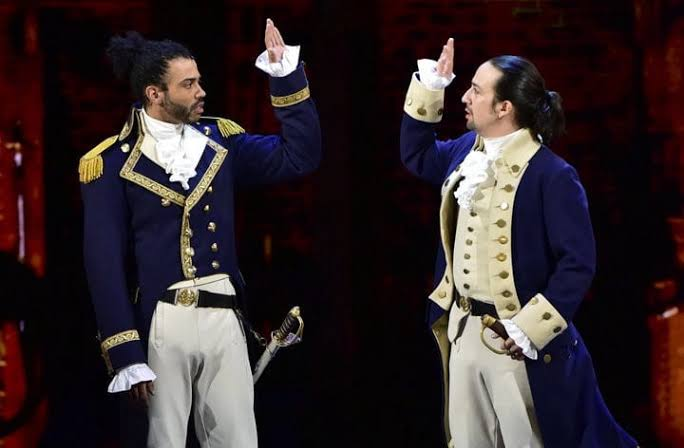
As the Revolutionary War develops, Hamilton becomes increasingly frustrated with his position as George Washington's 'Right Hand Man'. This introduces Washington as a military leader who recognises Hamilton's intelligence and writing ability, while 'Stay Alive' demonstrates the growing dangers of the conflict. The arrival of Lafayette in 'Guns and Ships' brings renewed energy to the story, with Miranda using exceptionally fast lyrical delivery to communicate his military importance, with Daveed Diggs rapping at 6.3 words per second. The first act eventually reaches its climax with 'Yorktown (The World Turned Upside Down)', which depicts the American and French victory over British forces in 1781. The historical Battle of Yorktown was a decisive turning point in the Revolutionary War, eventually leading to British surrender. Miranda transforms this military achievement into an enormous theatrical celebration, using the phrase about the world turning upside down to represent the extraordinary idea that a colonial rebellion could defeat one of the world's most powerful empires.
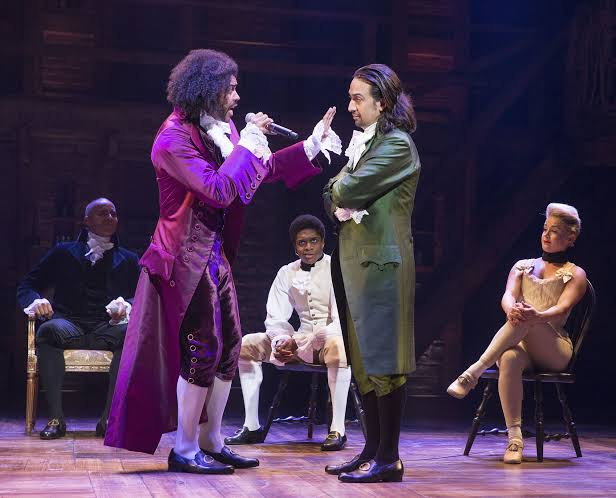
However, one of the most important moments in the first act is not a battle but 'Dear Theodosia'. Hamilton and Burr sing about becoming fathers and imagine the futures their children might experience. It is a remarkably tender moment in a musical otherwise dominated by political ambition and conflict. Both men want their children to inherit a world better than the one they experienced themselves. The song becomes particularly heartbreaking when considered alongside the events of the second act, especially the death of Hamilton's son Philip. The first act concludes with 'Non-Stop', which brings together the musical's central characters and themes as Hamilton becomes increasingly involved in the legal and political foundations of the new country. His relentless work ethic is celebrated, but it also becomes clear that his inability to stop working will eventually affect his relationships and personal life.
The second act shifts the focus from revolution to politics, exploring the difficulties of governing a newly independent nation. 'What'd I Miss' introduces Thomas Jefferson following his return from France, establishing him as Hamilton's major political opponent. Historically, Jefferson and Hamilton disagreed profoundly about the role of the federal government, economic policy and the future direction of America. These disagreements are transformed into 'Cabinet Battle #1' and 'Cabinet Battle #2', in which Miranda presents complicated political arguments as rap battles. Hamilton supports the federal government assuming state debts and establishing a national financial system, while Jefferson fears that this will give the government excessive power. Their disagreements also extend to America's relationship with France and Britain. These songs demonstrate how effectively Miranda uses musical theatre to make complicated political history accessible without removing the personalities and ideological conflicts behind it.
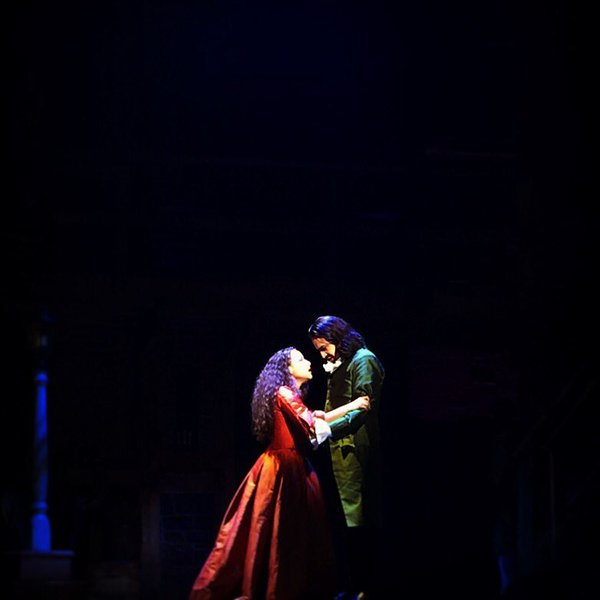
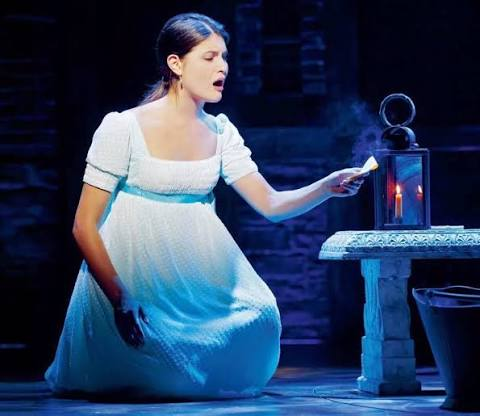
While Hamilton becomes increasingly involved in politics, his personal life begins to deteriorate. 'Take a Break' highlights Eliza and Angelica's frustration with his constant absence, while 'Say No to This' introduces his affair with Maria Reynolds. The affair was historically real and eventually became one of the most damaging scandals of Hamilton's political career. When confronted with accusations of financial corruption, Hamilton published the Reynolds Pamphlet in 1797, admitting to the affair in an attempt to prove that the money involved was not connected to government misconduct. Miranda explores this decision through 'We Know', 'Hurricane' and 'The Reynolds Pamphlet'. In 'Hurricane', Hamilton reflects on his childhood and his belief that writing has always allowed him to survive difficult circumstances. He believes that by controlling the narrative, he can protect his reputation. However, the publication of the pamphlet has devastating consequences for his marriage. 'Burn' gives Eliza the opportunity to express her betrayal, with her decision to destroy Hamilton's letters representing her refusal to allow her private pain to become another part of his carefully constructed public legacy.
The musical also explores the growing political rivalry between Hamilton and Burr. 'The Room Where It Happens' is particularly significant because it reveals Burr's frustration at being excluded from the political decisions that shape the country. The song references the historical compromise between Hamilton, Jefferson and Madison over the assumption of state debts and the location of the national capital. Burr wants influence but struggles to commit himself to a particular political philosophy. Hamilton, meanwhile, is willing to make enemies because he believes strongly in his ideas. Their differences become increasingly personal, particularly following Burr's victory over Hamilton's father-in-law, Philip Schuyler, in the 1791 Senate election. By the time the musical reaches 'Your Obedient Servant', their relationship has become almost entirely consumed by resentment. The song draws directly on the formal correspondence that preceded their famous duel in 1804, transforming the language of eighteenth-century letters into an increasingly threatening musical confrontation.
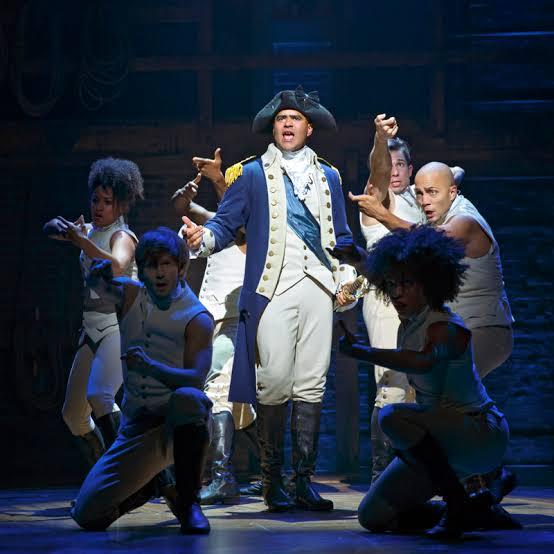
One of the musical's most emotionally significant moments is 'One Last Time', in which Washington announces that he will not seek another presidential term. The real Washington's decision to step down after two terms established an important precedent for American political leadership. The song explores the idea that leadership is not simply about gaining power but also understanding when to surrender it. Washington recognises that his legacy will be defined partly by his willingness to leave. This contrasts with Hamilton, who spends much of his life trying to secure his place in history. Washington's farewell also reinforces the importance of the musical's recurring phrase, 'History Has Its Eyes on You', reminding the audience that historical figures are ultimately judged by the consequences of their actions.
The personal tragedy of the second act reaches its most devastating point with the death of Philip Hamilton. In 'Blow Us All Away', Philip becomes involved in a confrontation with George Eacker following an insult directed towards his father. The disagreement escalates into a duel, and Philip is fatally wounded. This event is historically accurate, although Miranda condenses the circumstances for dramatic purposes. The tragedy is particularly significant because Philip has inherited many of his father's characteristics, including his concern with honour and reputation. 'Stay Alive (Reprise)' captures the devastating consequences of the duel, while 'It's Quiet Uptown' explores Hamilton and Eliza's attempt to rebuild their lives following the loss of their son. It is arguably the emotional centre of the entire production. For the first time, Hamilton's political ambitions and desire for recognition become completely irrelevant. He is simply a father who has lost his child. The song also demonstrates the importance of forgiveness, presenting reconciliation as something that cannot be demanded or achieved through public success.
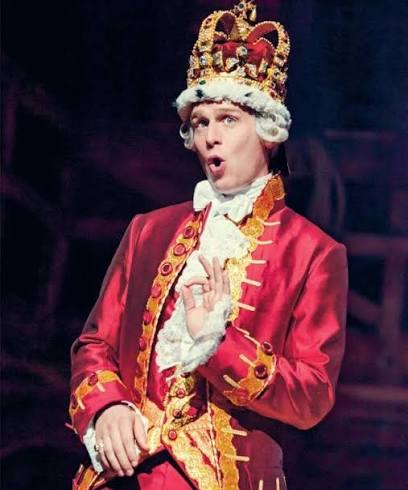
The final songs bring the musical towards its tragic conclusion. During the election of 1800, Hamilton supported Jefferson over Burr, despite their political disagreements, because he believed Jefferson's principles make him a more suitable president. Historically, Jefferson and Burr received equal electoral votes, leaving the decision to the House of Representatives. Hamilton's intervention contributed to Jefferson eventually becoming president. Burr's frustration with Hamilton continues to grow, leading to the correspondence depicted in 'Your Obedient Servant'. Their disagreement eventually culminates in the duel at Weehawken, New Jersey, on 11 July 1804. Hamilton is fatally wounded, while Burr survives. 'The World Was Wide Enough' explores the final moments of their confrontation, with Miranda leaving room for the historical uncertainty surrounding Hamilton's decision not to fire directly at Burr. The song is particularly powerful because Burr becomes the narrator of the tragedy, forced to live with the consequences of his actions and the destruction of his own political reputation.
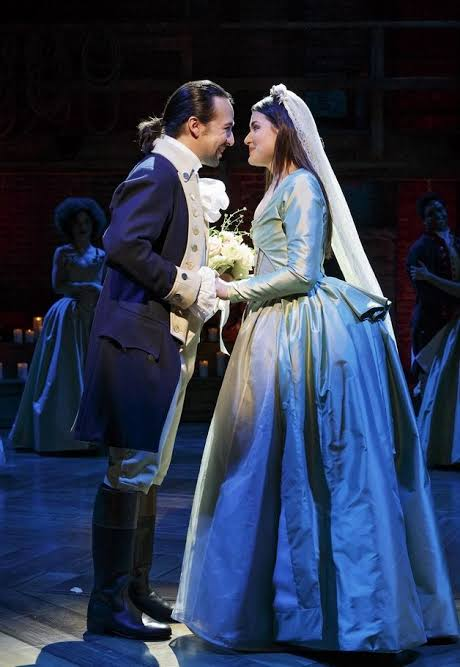
The final song, 'Who Lives, Who Dies, Who Tells Your Story', completely transforms the meaning of the musical. Following Hamilton's death, Eliza spends the remaining fifty years of her life preserving his legacy, collecting his writings and establishing charitable and educational initiatives. Historically, her contribution to preserving Hamilton's reputation was extraordinary. She also helped establish the New York Orphan Asylum, reflecting her commitment to children and education. Miranda gives Eliza the final word because she represents the person who ultimately ensures Hamilton's story survives. Throughout his life, Hamilton has been obsessed with writing his own legacy, yet it is Eliza who eventually determines how he will be remembered. This creates one of the most beautiful ironies in the entire production: the man who spent his life trying to control his place in history cannot control the final telling of his story.
What makes Hamilton particularly impressive is the way Miranda uses recurring musical motifs to connect individual songs into one continuous narrative. 'My Shot' represents Hamilton's ambition, while 'Wait for It' expresses Burr's contrasting philosophy. 'History Has Its Eyes on You' introduces the importance of legacy, which eventually becomes central to the ending. The musical also uses changes in genre to reflect character. Hamilton's rapid-fire hip-hop delivery communicates his intelligence and impatience, while Burr's more measured musical style reflects his cautious nature. Jefferson's funk and jazz influences create a completely different personality, and Washington's more traditional theatrical arrangements communicate authority and experience. These musical decisions are not simply stylistic choices; they become an essential part of the storytelling.
Of course, Hamilton is not a completely accurate historical account. Miranda deliberately compresses timelines, fictionalises conversations and simplifies certain political relationships to create a coherent theatrical narrative. The relationship between Angelica and Hamilton, for example, is presented with considerably more romantic intensity than historical evidence can conclusively establish. The musical also simplifies Hamilton's relationship with slavery, which was considerably more complicated than its presentation suggests. Although Hamilton participated in antislavery organisations and had connections to abolitionist circles, his personal and political relationship with slavery deserves more critical examination. Recognising these historical differences does not diminish the musical's achievements, but it is important to understand that Hamilton is a creative interpretation of history rather than a documentary.
Ultimately, I think what makes Hamilton such an extraordinary musical is its ability to make history feel personal. It takes events that happened centuries ago and transforms them into a story about experiences that remain recognisable today. Hamilton's ambition, Burr's insecurity, Eliza's heartbreak, Angelica's sacrifice and Washington's understanding of responsibility all explore emotions that exist far beyond their historical setting. The musical asks questions about identity, morality, love and the consequences of our choices, while constantly reminding the audience that the stories we inherit are shaped by the people who choose to tell them.
For me, the greatest achievement of Hamilton is the way it begins with a young man who has nothing and desperately wants to be remembered, only to end with the woman who loved him ensuring that he will never be forgotten. It is a story about a man who believed that his life had to mean something, a man who wrote endlessly because he was terrified of disappearing into history. Yet the final message is not about his political achievements, his intelligence or even his extraordinary ambition. It is about the people who remain after we are gone, the memories they preserve and the love that survives long after everything else has disappeared.
Hamilton spends his entire life trying to write his own story, but ultimately, it is Eliza who tells it. And that is what makes the final question so incredibly powerful: who lives, who dies, who tells your story? Because history is not simply about the people who make it. It is about the people who remember it.