

Behind: Print VS E-Books
Written by Kayla Berigan
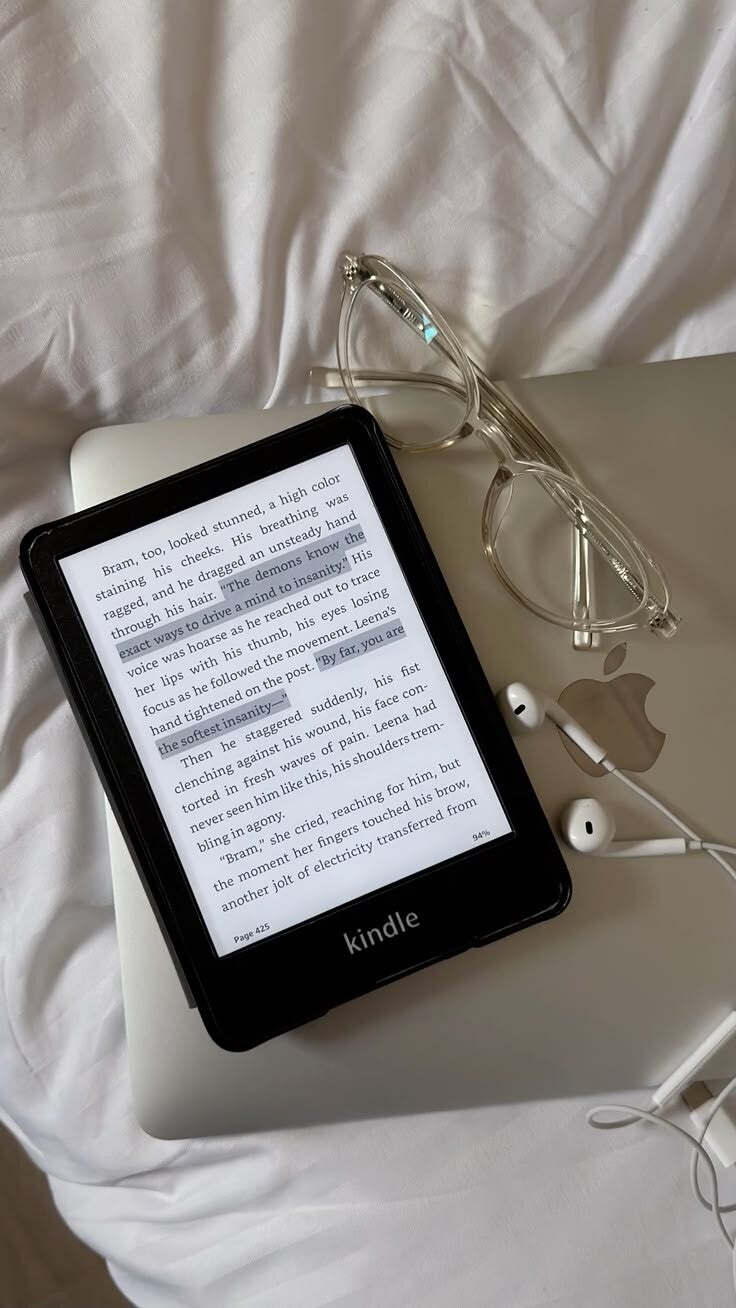
E-books versus printed books is a discussion that is mainly based around preference; however, it extends far beyond the idea of paper against pixels. While printed books have been around for centuries, the evolution of technology has brought a different way of reading that has become increasingly popular in recent years. Standard printed books allow for readers to feel connected to the pages and therefore involved in the stories, however e-books have large storage capacities and easy transportation that offers the advantages of bringing as many stories as you please to as many places as possible. Whether the reader chooses their kindle or a paper back, there are advantages and disadvantages to both.

According to recent surveys printed books are still a fan favourite with 65% of US adults (Sandra walker 2025) continuing to read a print book. Printed books offer many advantages that you would not find on a screen. Many readers say that they prefer the texture and smell of physical books compared to the bright screen that comes along with an e-book. The 2018 Educational Research review showed that the main reason the people prefer printed books is because they reduce their use of screens (sciencedirect.com). As well as this, a printed book requires nothing except light. There is no need to login, no notifications and no subscription. Readers have noticed that ‘e-reading’ leads to distractions and a loss of concentration. Print forces the readers sole focus into their book of choice this allows for, students, adults who work with technology or people averaging 7 or more hours of screen time per day, a break from the blue light that comes off their phone, laptops or tv’s.
The debate about printed vs e-books is heavily centred around education and whether it impacts the way children and teenagers develop their literacy skills. Studies have shown that the medium, in which children are reading, may influence their ability to understand and retain information. When reading from a printed book we can focus more deeply, thus allowing us to process information thoroughly and effectively (taylor.com 2024). A study showed that 92% of people surveyed found it easier to concentrate while reading print, due to the spatial and tactile cues that help the reader process the words.

Although allowing readers to immerse themselves fully in the book, printed books come with many disadvantages. Many readers find that they are limited to e-books because of the expense that comes with collecting physical books. In Ireland the average cost of a book is approximately €12.43 with educational titles and non-fiction among the most expensive. For some people this is just not feasible for them so they are left with no other option but to go find a cheaper way around which may lead them to e-books. Physical books also take up a large amount of room. Readers who have limited space or who travel a lot would have to take this into consideration before purchasing large books that may take up a lot of space.

E-books offer a range of benefits that readers would not find in a paperback. Unlike a regular book, an e-books font can be adjusted to fit the likings of the reader and with most being backlit e-readers can now enjoy their books at night without fear of disturbing those around them. For those who are constantly on the move, e-books allow you to bring multiple books on trains, planes or in the car without the worry of space. With most kindles/e-books holding up to 15,000 books, readers are now free to hold thousands of books in a device that fits in their bag. E-books allow readers to collect multiple series without the added expense, with most books costing an average of €8 each, this takes the stress off collectors enabling them to enjoy their hobby without the limitations of the price.
Digital technology is slowly taking over and transforming education. Research shows that the moderate use of technology for learning is linked to better academic outcomes (PISA2022). Irish students are becoming familiar and more comfortable at working technology, and they are scoring higher on tests, this shows the positive side of learning via technology. However, teachers have noticed a lower standard of concentration leading to students becoming distracted easily as a result in the increased use of technology in schools.
Although e-books are becoming increasingly more popular, we cannot ignore the disadvantages that come with e-reading. The artificial light can lead to readers experiencing strained eyes and disrupted sleep. Reading on electronic devices for extended periods of time and especially in dim light can lead to discomfort or headaches, unlike natural light from printed books. E-books require electronic devices and power, this means if left uncharged readers can be left without their books for extended periods of times, as well as that if the device breaks you are at risk of losing all the books downloaded onto it.

Ultimately there are both advantages and disadvantages to both styles of reading. In my opinion the decision of which is best depends on the reader's personal preference. Printed books have the benefit of touch and smell allowing readers to feel the book as they are reading but they come at a high cost that isn’t affordable to everyone, meanwhile e-books are compact and transportable but can cause severe health and eye problems if used for extended periods of time. When it comes to education, I believe if used together students can receive a well-rounded education that they can adapt to their learning styles. If one student finds they learn better by doing notes through a device then they can do so or if another student decides they prefer to hold the books, they also have access to that if needed. I don’t believe that one is better than the other but rather they should be used together.