

Behind: Ferris Bueller's Day Off (1986)
Written by Ezman Rizwan

“Life moves pretty fast if you don’t stop and look around for a while you could miss it.”
Directed by the king of coming of age himself, John Hughes, Ferris Bueller's Day Off may just be a must watch movie for people all around the globe. Come rain or shine, for old or young this is your next Friday night movie pick.
What I believe makes this movie so ideal, and so deserving of its 85% score on rotten tomatoes, is that you get the option to over analyse each character and scene due to the movie's underlying depth or simply turn your brain off and laugh (or cringe) at the unfortunate relatability.
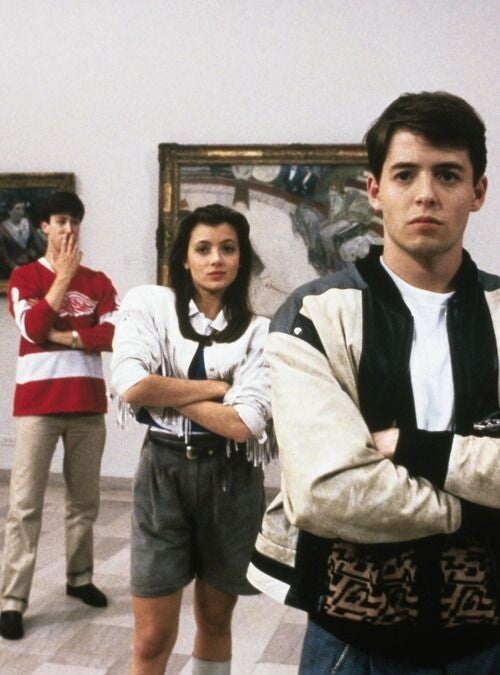
The centre of the film, as you may have guessed, focuses on Ferris Bueller, a charismatic, somewhat one dimensional archetype of the chaotic yet well loved main character played by the perfectly cast Matthew Broderik. As a dramatic contrast, alongside him is his uptight, neurotic best friend Cameron Frye (Alan Ruck) and Bueller's girlfriend, Sloane Peterson (Mia Sara) who can be seen as a middle ground in between all the mayhem.
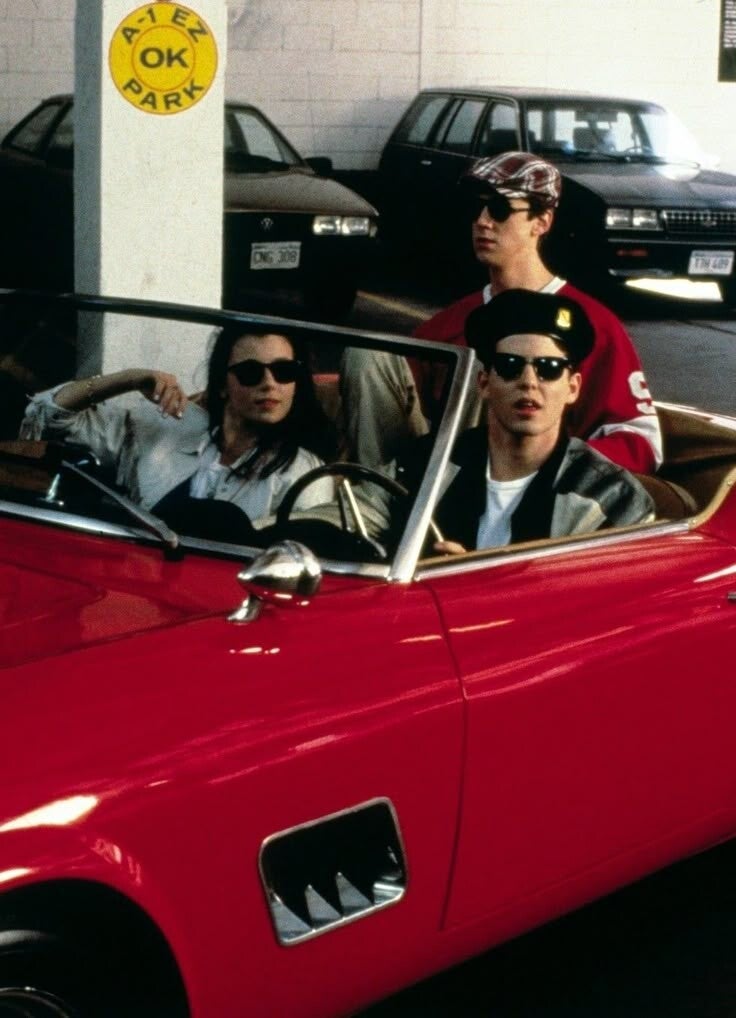
The movie's central plot sparks from a common dilemma all children experience at least once in their young adolescent lives: Ferris does not want to go to school. As expected, he decides to fake an illness yet, instead of choosing to play video games all day, Ferris chooses to “kidnap” his two friends so they can all take the day off and explore the great city of Chicago instead. Throughout the film, our protagonists are thrust into all sorts of different shenanigans all while their principal, Ed Rooney ( played by Jeffrey Jones) is trying to hunt them down.
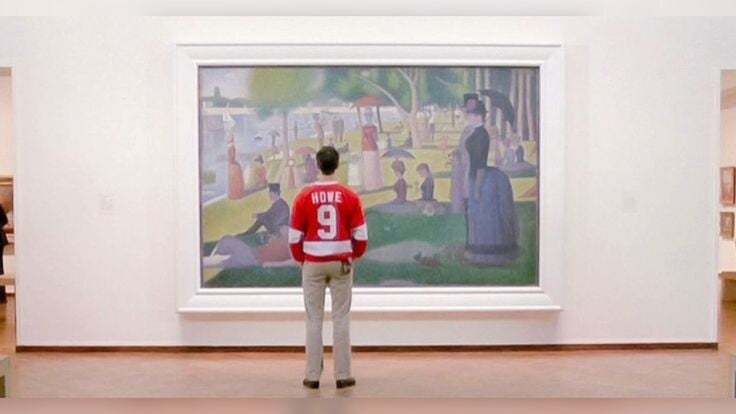
As we watch Ferris live out every child's dream, we come to learn more about these characters, which is where you get the choice of finding the deeper message and ideas Hugh was trying to convey. Whilst Ferris is the obvious main character, Cameron is a reflection of most of the viewers, and Ferris is the best friend we all wished we had. So what if the character who had life all figured out wasn’t the one who needed to change? Throughout the film, Cameron is nervous and hypochondriacal; he is the only character who looks further than the present, who reflects on the future and sees…nothing.
Cameron can be seen as lost and conflicted but by the end, he is the character who changes and decides to take a stand and take control over his life. Due to this development, some fans speculate Cameron to be the true main character, whilst Ferris is simply a catalyst for this breakthrough.
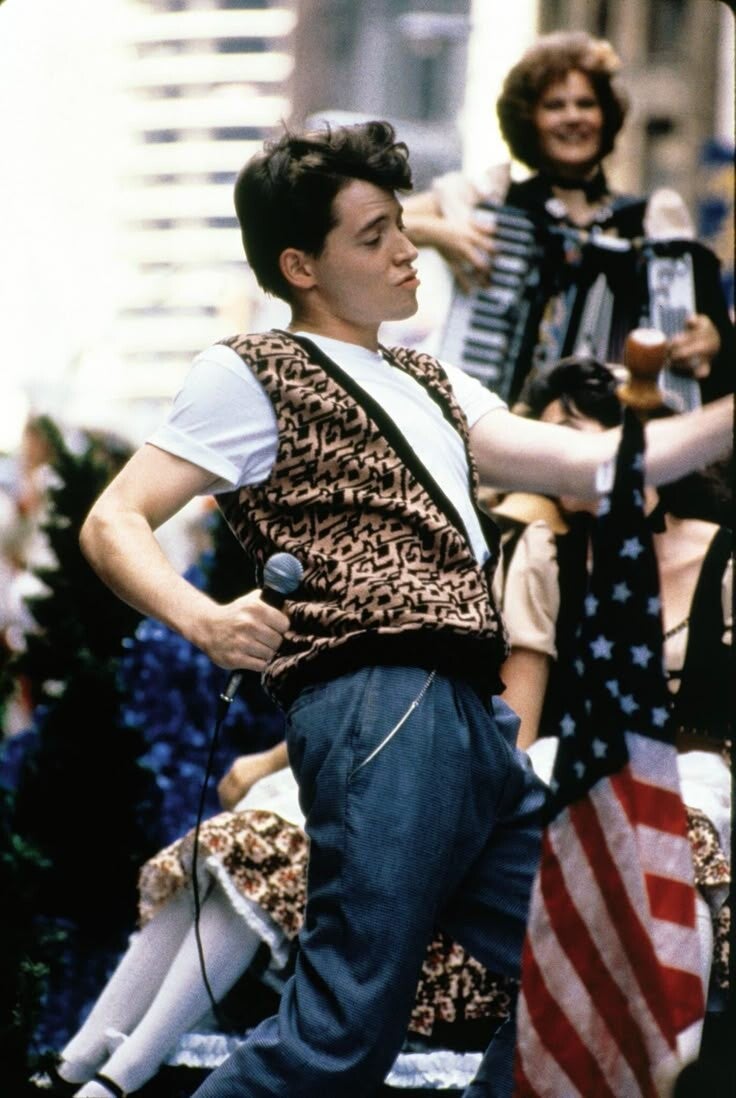
Bueller's simplistic character arc may be seen as a criticism, however I believe it was a deeply intentioned choice which makes the film the perfect comfort watch. When crafting the character, Broderik explains:
“I thought Ferris shouldn't seem to be trying too hard, that things came easy to him. I wanted to be a little cool and aloof. We didn't want him to be somebody you wanted to punch in the face. That's always the danger with guys who get away with everything.”
By making Ferris such an easy going character, they simultaneously made him impossible to not root for which, in my opinion, made this movie such an easy watch. No character was made to be hated, even the principal who was the clear antagonist brought more life and comedy to the film so even if viewers wanted to see him fail, watching the movie would not be as enjoyable of an experience without him.
However no movie is without its flaws. Some modern day viewers often criticise Sloane’s lack of personality in this film. Often described as a “manic pixie dream girl,” Sloane's character often is viewed as pointless and only there to serve Ferris’s ego. Mia Sara herself has a negative recollection of her time filming the movie as she felt “alienated” and disconnected to Hughes. She also agrees that her character felt limited and unrealistic. In one particular scene, Sloane admits to having no plans for the future and whereas Cameron says this to evoke a conversation of feeling hopeless and empty at such a young age, Sloane admits this with a more carefree tone highlighting her lack of ambition and purpose but in a way as to not to be taken too seriously proving her irrelevance.
Ultimately, Ferris Bueller's Day Off is a cult classic loved by millions (proven by the $70 million they made in the box office) This was also proven to be a once in a lifetime movie by the failed tv show adaptation they tried to make in the 1990s, which only managed to last for one 13 episode season.
So next time you’re feeling a little under the weather, or pretending to, wear your comfiest pajamas, grab some popcorn and forget about reality for a little while with the 80’s classic, Ferris Bueller's day off.