

Behind: Mockingjay by Suzanne Collins
Written by Taylor Walker


Some books are written to entertain, offering readers an escape into worlds far removed from their own. Others are written to challenge the way we think, forcing us to confront uncomfortable truths about society, power and human nature. Mockingjay, the third and final instalment of Suzanne Collins’ The Hunger Games trilogy, manages to do both. It is a dark, emotionally exhausting and often unsettling conclusion to a series that began with a simple fight for survival and gradually transformed into something far more complicated. While its predecessors focused heavily on the spectacle of the Hunger Games themselves, Mockingjay abandons the arena in favour of something much larger: a revolution. With its exploration of trauma, political manipulation, sacrifice and the devastating consequences of war, Collins delivers a conclusion that is far from comforting, but arguably all the more powerful because of it.
At the centre of the novel is Katniss Everdeen, a seventeen-year-old girl who has unwillingly become the face of a rebellion against the Capitol. Following the destruction of District 12 and her rescue from the Quarter Quell, Katniss finds herself living in the underground society of District 13. The world she once knew has been torn apart, Peeta Mellark remains in the hands of the Capitol, and the districts are beginning to rise against President Snow's oppressive government. As the rebellion gains momentum, Katniss is asked to embrace her role as the Mockingjay, a symbol of hope and resistance for the people of Panem. However, what initially appears to be a straightforward battle between good and evil soon becomes far more morally complicated, forcing Katniss to question not only the people she is fighting against, but also those she is fighting alongside.
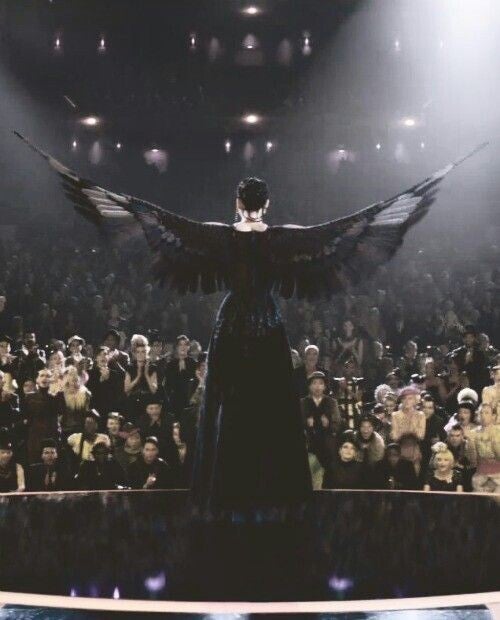
This premise might suggest an action-packed story filled with heroic victories and dramatic battles, but Mockingjay is much more interested in examining what happens to people when they are pushed beyond their limits. Collins does not attempt to romanticise rebellion or present war as an exciting adventure. Instead, she focuses on its psychological consequences, exploring how violence, fear and grief can permanently alter a person's understanding of the world. The result is a novel that feels noticeably different from the previous two books. Where The Hunger Games and Catching Fire offered moments of excitement through their carefully constructed arenas, Mockingjay replaces that familiar structure with uncertainty, political tension and an overwhelming sense that nobody is truly safe.
One of the novel's greatest strengths is its portrayal of Katniss herself. Throughout the trilogy, she has been presented as courageous, resourceful and fiercely protective of the people she loves. However, Collins refuses to transform her into the fearless revolutionary leader that others expect her to become. Instead, Katniss is frequently frightened, angry, exhausted and unsure of herself. She struggles with the expectations placed upon her and becomes increasingly frustrated by the way her image is controlled by those around her. This makes her a particularly compelling protagonist because her strength is never presented as the absence of vulnerability. Katniss is not powerful because she is unaffected by what she experiences, but because she continues to act despite the emotional damage she carries.
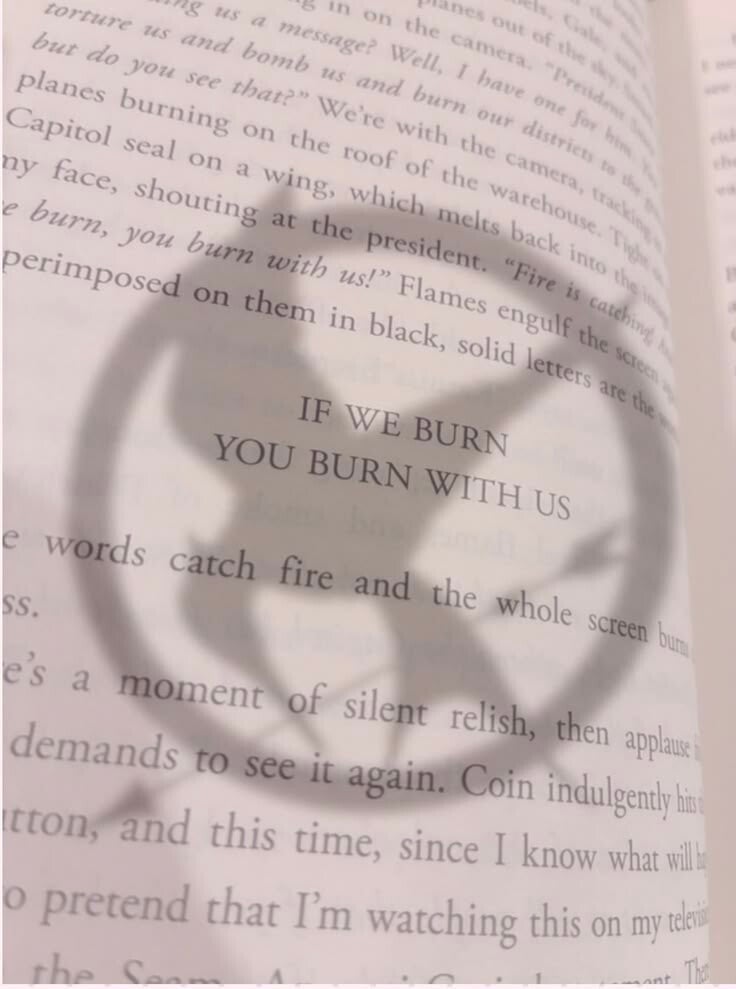
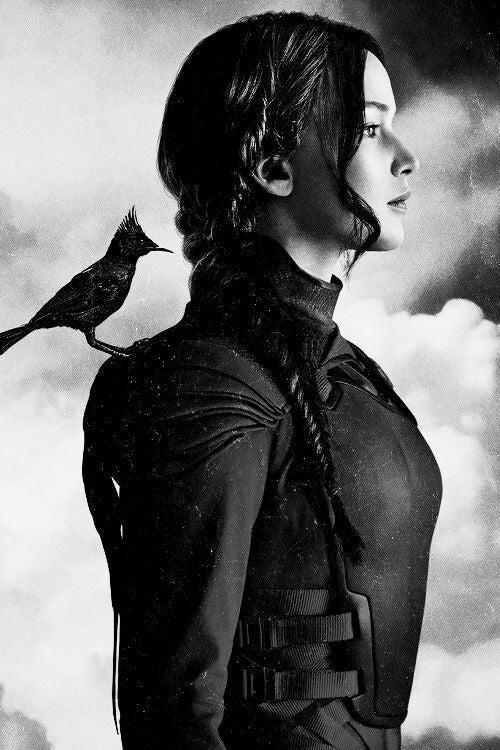
Perhaps the most interesting aspect of Katniss's character is her complicated relationship with the symbol she has become. To the people of Panem, the Mockingjay represents courage, defiance and the possibility of freedom. To Katniss, however, the title often feels like another responsibility she never agreed to carry. Her image is carefully constructed through propaganda, filmed speeches and public appearances, leaving her with surprisingly little control over the revolution supposedly being fought in her name. Collins uses this contradiction to explore the difference between a person and the version of them that society chooses to celebrate. Katniss is admired for her bravery, yet the people surrounding her frequently overlook the frightened teenager beneath the symbol.
The novel's political themes are equally effective. President Snow remains a terrifying representation of authoritarian power, but Collins introduces a more unsettling question through the leadership of District 13. President Alma Coin initially appears to offer everything Snow does not: freedom, justice and the possibility of a better future. However, as the story progresses, the similarities between the two leaders become increasingly difficult to ignore. Both understand the importance of controlling information, manipulating public opinion and using individuals to achieve political goals. This creates one of the novel's most thought-provoking ideas: removing a cruel leader does not automatically remove the systems that allowed cruelty to exist in the first place. The rebellion may be fighting for freedom, but Collins repeatedly encourages readers to question what that freedom will actually look like.
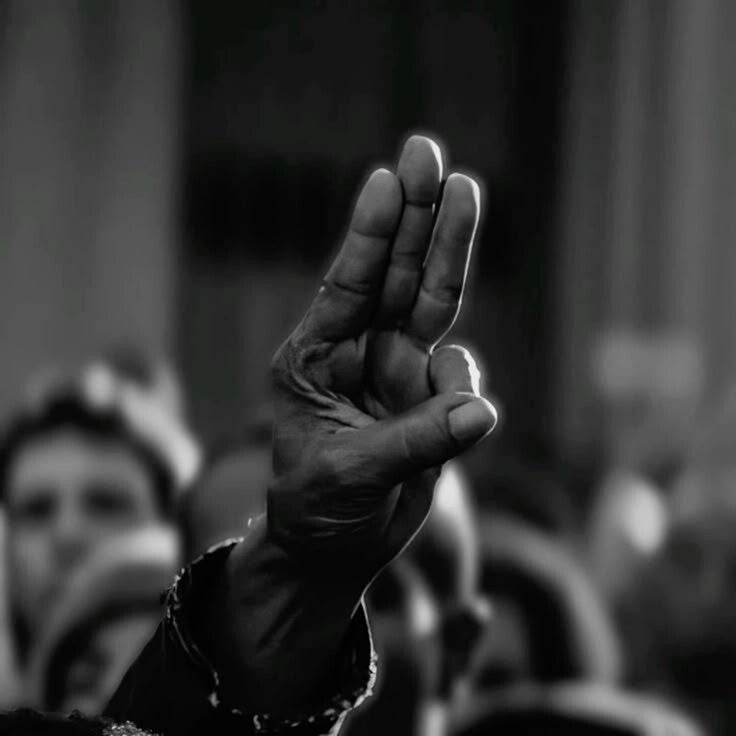
Another particularly powerful element of Mockingjay is its examination of propaganda and the media. Throughout the novel, Katniss participates in a series of carefully produced broadcasts designed to inspire the districts and weaken the Capitol's authority. These scenes reveal how easily images, emotions and personal suffering can be transformed into political weapons. Even genuine moments of grief are recognised for their ability to influence public opinion. The contrast between Katniss's authentic emotions and the calculated way they are presented to the public makes these sequences especially uncomfortable. Collins demonstrates that propaganda is not exclusive to those traditionally considered villains. Even people fighting for a just cause can manipulate the truth when they believe the outcome justifies their actions.
The supporting characters also contribute significantly to the novel's emotional impact. Peeta's storyline is particularly heartbreaking, as his experiences in the Capitol leave him struggling to distinguish between reality and the memories that have been manipulated against him. His transformation is disturbing precisely because readers have spent two books becoming familiar with his kindness, loyalty and compassion. Seeing those qualities threatened creates a sense of loss that extends beyond physical suffering. Meanwhile, Gale Hawthorne represents a very different response to oppression. His anger towards the Capitol becomes increasingly connected to his belief that extreme violence can be justified when used against an enemy. The contrast between Peeta and Gale is therefore about much more than their romantic relationships with Katniss. It becomes a conflict between compassion and revenge, and between the desire to preserve humanity and the temptation to sacrifice it for victory.
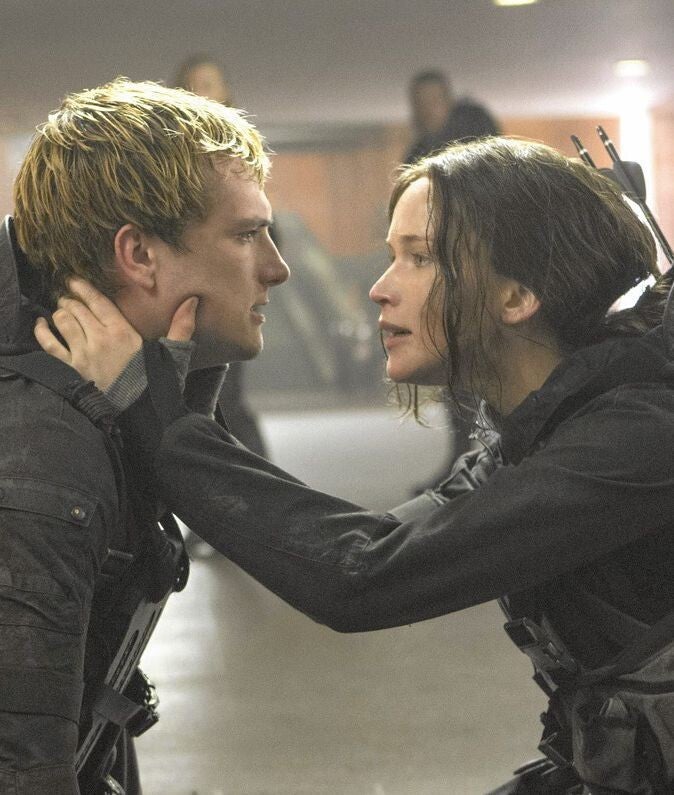
Although romance remains part of the story, Collins wisely refuses to make it the novel's central concern. The relationship between Katniss, Peeta and Gale is shaped by their experiences of war rather than existing separately from them. Their feelings are complicated by guilt, trauma, loyalty and the very different ways they respond to violence. What makes these relationships interesting is that none of the characters emerge from their experiences unchanged. Love is not presented as something capable of magically repairing every wound, but as something that must survive alongside the consequences of what has happened. This gives the emotional relationships a maturity that might not have been expected from a series initially associated with a teenage love triangle.
However, Mockingjay is not without its weaknesses. One of its most noticeable problems is its uneven pacing. Much of the opening section takes place within District 13, where Katniss spends considerable time recovering, attending meetings and resisting the expectations of the rebellion's leadership. Although these chapters are important for establishing the novel's political and psychological themes, they occasionally feel repetitive. Readers accustomed to the immediate danger and tightly structured suspense of the previous books may find the beginning unusually slow. The story eventually develops a much stronger sense of urgency, but the transition between political preparation and direct conflict is not always entirely smooth.
The final section, in particular, introduces a dramatic shift in atmosphere. As Katniss becomes more directly involved in the fighting, the novel begins to resemble the deadly arenas of its predecessors. The streets of the Capitol are filled with traps, unpredictable dangers and situations in which survival often depends on chance. While these sequences are undeniably gripping, the rapid succession of violent events can sometimes feel overwhelming. Certain character deaths occur so suddenly that readers are given little opportunity to process them before the story moves forward. Yet this is also where Collins' intentions become important. War rarely provides the closure, fairness or meaningful final moments that fiction traditionally offers. The abruptness of these losses reinforces the novel's refusal to make violence feel satisfying.
One of the most devastating aspects of the book is its treatment of grief. Collins understands that the consequences of war do not disappear simply because the fighting ends. The characters who survive are left with memories, guilt and emotional wounds that cannot be repaired through a single victory. This is especially evident in Katniss's experiences towards the conclusion, where the cost of the rebellion becomes impossible to separate from its achievements. Rather than celebrating triumph in the conventional sense, the novel asks whether winning can ever feel entirely victorious when so much has been lost. It is a difficult question, and Collins deliberately avoids providing a simple answer.
The writing itself is another reason the novel remains effective. Collins' prose is generally direct and uncomplicated, allowing the emotional intensity of the story to emerge through Katniss's observations rather than elaborate descriptions. The first-person narration places readers inside her increasingly fractured understanding of events, creating a sense of confusion and uncertainty that reflects her psychological state. At times, this limited perspective can make the wider political conflict difficult to follow, particularly when significant developments occur beyond Katniss's immediate experience. Nevertheless, it is this restriction that gives the novel much of its emotional credibility. Readers do not experience the rebellion as distant observers who understand every strategy and decision. They experience it through someone who is struggling simply to survive it.
What makes Mockingjay particularly memorable is its unwillingness to offer the kind of ending that readers might initially want. After spending three books watching Katniss fight against injustice, it would be easy to expect a triumphant conclusion in which the villains are defeated, the heroes are rewarded and everything returns to normal. Collins chooses a more complicated approach. Victory comes at an enormous cost, and the possibility of rebuilding a peaceful life is presented as a gradual process rather than an immediate reward. The novel recognises that surviving something terrible and recovering from it are two entirely different things.

Ultimately, Mockingjay succeeds because it understands that the most important part of a revolution is not simply who wins, but what happens to the people who are forced to live through it. It is a novel about power, grief, sacrifice, manipulation and the dangerous ease with which justice can become another excuse for cruelty. Although its pacing occasionally falters and its relentless darkness may frustrate readers hoping for a more uplifting conclusion, these imperfections do little to diminish its emotional impact. Beneath the violence and political conflict is a deeply human story about a young girl who never wanted to become a symbol, but whose actions changed the world around her.
If you are looking for a fast-paced dystopian adventure with clearly defined heroes, satisfying victories and a comforting conclusion, Mockingjay may not be exactly what you expect. However, if you want a novel that challenges the traditional idea of heroism, explores the emotional consequences of war and leaves you questioning the meaning of victory long after the final page, Suzanne Collins' conclusion to The Hunger Games trilogy is well worth reading. It may not be the easiest book in the series to enjoy, but it is arguably the most important. After all, Mockingjay reminds us that the greatest challenge is not always surviving the fight, but learning how to live once it is over.