

Behind: Pippa Fitz Amobi (AGGGTM)
Written by Taylor Walker

There are very few fictional characters who manage to leave such a lasting impression on you as Pippa Fitz-Amobi. At first glance, Pip seems like the typical academically gifted, slightly awkward teenage girl who has her entire future mapped out in front of her. She is intelligent, organised, ambitious and seemingly incapable of doing anything without a plan. However, beneath this carefully constructed image is one of the most complex, compelling and genuinely heartbreaking character developments in young adult fiction. Across Holly Jackson's A Good Girl's Guide to Murder trilogy, Pip transforms from an ordinary schoolgirl with an interest in true crime into someone almost unrecognisable from the person we meet at the beginning. What makes her such an extraordinary character is not simply her intelligence or determination, but the way we are forced to watch those qualities become both her greatest strengths and her greatest weaknesses.

At the beginning of A Good Girl's Guide to Murder, Pip is introduced as someone who fundamentally believes in goodness. She is the girl who gets excellent grades, follows the rules and tries to see the best in people. Her decision to investigate the murder of Andie Bell for her school project is initially motivated by a belief that Sal Singh, who was accused of murdering Andie before taking his own life, could never have committed such a crime. Pip remembers Sal as a kind person and refuses to accept the version of events that everyone else in Little Kilton has seemingly agreed upon. This immediately establishes one of her most important characteristics: she is unwilling to accept something simply because everybody else believes it to be true.
However, I think it is important to recognise that Pip's investigation is not entirely about justice for Sal. It is also about her own need to understand the world around her. She is naturally curious, incredibly observant and almost obsessively determined once something captures her attention. There is a sense that solving the mystery becomes something she needs to do rather than something she simply wants to do. This determination makes her an incredibly effective investigator, but it also introduces one of the most significant conflicts in her character: Pip struggles to recognise when determination becomes obsession.

One of the most interesting aspects of Pip's personality is her relationship with morality. She begins the trilogy believing that she is a good person, someone who knows the difference between right and wrong. Yet as her investigation progresses, she finds herself lying, manipulating people, breaking into properties and putting herself in increasingly dangerous situations. She even begins to question whether the person she is becoming is someone she would recognise. Her transformation is particularly interesting because she does not suddenly abandon her morals. Instead, she gradually discovers that doing what she believes is right does not always mean behaving in a way that is entirely good.
This is where the title A Good Girl's Guide to Murder becomes particularly meaningful. Pip has spent so much of her life identifying herself as the good girl that she struggles when her actions no longer fit that description. Her investigation forces her to confront the uncomfortable reality that people are rarely as straightforward as the labels placed upon them. The same applies to Pip herself. She is not simply good or bad, innocent or guilty, brave or reckless. She is all of these things at different moments, and that complexity makes her feel remarkably real.
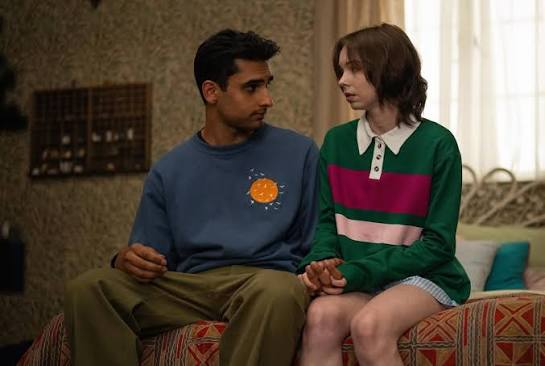
Her relationship with Ravi Singh is another essential part of understanding her character. Ravi represents something that Pip desperately wants to protect: the possibility that the truth can still bring justice to people who have been unfairly judged. Their partnership is built upon mutual trust, shared determination and an understanding of what it means to have your life affected by something you cannot control. Ravi also provides a contrast to Pip's increasingly obsessive approach to the investigation. While both are determined to uncover the truth, their emotional experiences are different. Pip is investigating a case, but Ravi is trying to reclaim his brother's memory and restore his family's reputation. Their relationship develops into something much deeper, and Ravi becomes one of the few people who can see beyond Pip's determination and recognise the person underneath it.
However, perhaps the most important part of Pip's character development happens in Good Girl, Bad Blood and As Good as Dead. If the first novel introduces us to Pip's intelligence and determination, the following books explore the consequences of those qualities. She has already experienced the emotional and physical dangers of investigating the truth, but she cannot simply return to the person she was before. Her involvement in the previous case has changed her relationship with the world, and she begins to understand that uncovering the truth does not necessarily mean finding peace.

By As Good as Dead, Pip is almost entirely different from the girl we first meet. The consequences of her previous experiences have begun to affect her mental health, relationships and sense of safety. She is dealing with trauma, anxiety and the psychological impact of everything she has witnessed. This is particularly significant because it challenges the traditional idea of a teenage detective who always manages to emerge victorious from every mystery. Pip is not immune to what happens to her simply because she is intelligent or courageous. She is a young woman who has experienced genuinely horrific situations, and the psychological consequences are impossible to ignore.
I think one of the most heartbreaking things about Pip is that her intelligence, which initially appears to protect her, eventually becomes something that makes it difficult for her to switch off. She notices everything. She questions everything. She constantly searches for connections and possibilities, even when doing so comes at the expense of her own wellbeing. Her mind is both her greatest weapon and something she cannot escape. There is something particularly tragic about watching someone whose curiosity once brought her so much excitement gradually lose the ability to experience the world without suspicion.

Another important aspect of Pip's character is her relationship with control. Throughout the trilogy, she repeatedly places herself in situations where she believes that if she gathers enough information, she can prevent something terrible from happening. She wants answers because answers give her a sense of control over circumstances that would otherwise feel unpredictable. Yet the more she discovers, the more she realises that some things cannot be controlled. People lie, situations change and even the most carefully constructed plans can fall apart. Her development is partly about learning that being intelligent does not mean being invincible.
I also think Pip's family relationships deserve recognition. Her relationship with her mother, Leanne, and stepfather, Victor, highlights the contrast between the relatively ordinary teenage life she is supposed to be experiencing and the increasingly dangerous world she becomes involved in. Her family wants her to be safe, successful and happy, but Pip's determination often makes it difficult for her to accept their concerns. This creates another layer of conflict because she is not simply risking herself; she is also affecting the people who love her.

What makes Pip such a memorable protagonist, however, is that Holly Jackson never allows her to become completely defined by her trauma. Even as she changes, there are still glimpses of the girl we met in the first book. Her humour, intelligence, curiosity and capacity for love remain important parts of who she is. She is flawed, occasionally frustrating and sometimes makes decisions that leave you wanting to reach through the pages and tell her to stop. But that is precisely why she is so compelling. She feels like a real person rather than a fictional character designed to be admired.
Ultimately, I think Pip Fitz-Amobi is one of the strongest examples of character development in modern young adult fiction. Her story is not simply about solving murders or uncovering secrets. It is about identity, morality, justice, obsession and the consequences of refusing to look away from uncomfortable truths. We meet a girl who believes that being good means doing the right thing, and we leave her having learned that the world is considerably more complicated than that.

Perhaps the most important thing about Pip is that she never stops being human. She makes mistakes, she gets things wrong, she hurts and she struggles. She is not an untouchable detective who always knows what to do. She is a teenage girl who wanted to prove that somebody had been wrongly accused, and who discovered far more about the world than she ever expected to.
And I think that is why I find her so difficult to forget. Pip Fitz-Amobi is not simply a character you admire for being clever or brave. She is a character you become emotionally invested in, someone whose happiness you desperately want despite knowing how much she has already endured. Her journey is messy, painful and at times devastating, but it is also a reminder that people are so much more than the things that happen to them.
Pip Fitz-Amobi might have started her story trying to uncover the truth about everybody else, but ultimately, her trilogy becomes just as much about discovering the truth about herself.